+86-18126757325


An Auto Radio is more than a dashboard sound source. It receives broadcast signals, processes audio, and sends that sound through the vehicle’s speakers. In older systems, an antenna captures AM or FM waves from nearby stations. The radio tuner selects one frequency, while internal circuits reduce noise and strengthen the signal. An amplifier then increases the audio power. The speakers convert that electrical energy into music, speech, or traffic updates.
The process feels simple from the driver’s seat. Turn the knob, choose a station, and sound appears. Inside the unit, however, several parts work together within seconds. Digital Auto Radio systems may also process satellite signals, Bluetooth audio, USB files, and smartphone connections. A small screen displays station data, while software manages presets and volume levels. Signal quality can change near tall buildings, tunnels, or mountain roads. Static may appear.
Practical inspection shows how important each connection is. A loose antenna cable can create weak reception, even when the radio itself works correctly. Dust, damaged wiring, or aging speakers can also reduce clarity. The explanation is not perfect because vehicle designs vary widely. Some modern cars combine the radio with navigation, safety alerts, and climate controls. That integration makes diagnosis less straightforward.
Understanding how an Auto Radio works helps drivers identify ordinary problems without guessing. It also encourages safer attention to wiring, volume levels, and professional service when repairs become complex.
An auto radio is the vehicle’s built-in audio and information system. It receives broadcast signals, plays stored media, and may connect with a phone. Its main role is practical: it gives the driver news, directions, alerts, and hands-free communication. The unit also routes sound through speakers placed around the cabin. It is more than entertainment.
Inside, a tuner selects a radio frequency and converts it into an electrical signal. An amplifier increases that signal before sending it to each speaker. Digital systems process audio data, adjust volume, and reduce unwanted noise. A control panel or steering-wheel buttons send commands to the system. During vehicle inspections, I check clear sound, stable reception, and safe control placement. A loose connection can create crackling or sudden silence.
The radio also supports the driver’s attention when designed correctly. Voice controls can reduce the need to look away from the road. However, complicated menus may distract more than they help. That detail is easy to overlook. Reception changes with terrain, weather, and nearby electrical interference. Even a strong system can perform poorly in a tunnel. I have learned that “better sound” is not always better usability. Clear controls, predictable responses, and balanced volume matter during everyday driving. Some older units remain reliable, though their connections may need careful testing.
The main parts of an auto radio are the head unit, tuner, amplifier, speakers, antenna, wiring, and power supply. The head unit receives driver commands through buttons, knobs, or a touchscreen. Its tuner selects broadcast frequencies and converts radio waves into audio signals. An antenna captures those weak signals from outside the vehicle. Signal processing then removes some noise and adjusts volume, balance, and tone. The amplifier increases electrical power before sending it to each speaker. Speakers change that power into vibrations, creating sound inside the cabin.
The system also depends on stable wiring and grounding. A loose connection can cause static, fading, or complete silence. Modern receivers may process digital broadcasts, stored audio, and wireless connections through the same control unit. Grand View Research estimated the global automotive infotainment market at about $24.3 billion in 2023, with continued growth expected through 2030. That figure reflects how radios now support wider cabin technology.
Still, more functions can make repairs harder. A simple knob often feels more dependable than a crowded screen. That may sound old-fashioned. My own inspection experience also suggests that speaker placement matters as much as amplifier power. A powerful signal cannot fix a poorly sealed door or damaged cone.
An auto radio begins with its antenna, which captures electromagnetic waves traveling through the air. The antenna is small, but it responds to many frequencies at once. A tuner selects the frequency matching the station you choose. This step removes most unwanted signals before deeper processing begins.
The selected signal enters a radio-frequency amplifier, where its weak energy becomes easier to handle. A mixer and local oscillator then shift the signal to an intermediate frequency. This design improves filtering and keeps tuning stable while the vehicle moves. The demodulator separates the encoded audio from the carrier wave. For FM broadcasts, it reads changes in frequency. For AM broadcasts, it reads changes in amplitude.
Digital processing may reduce hiss, balance stereo channels, and adjust volume changes. An audio amplifier strengthens the recovered sound before sending it to the speakers. A practical road test reveals the process clearly: static may increase near tall buildings, inside tunnels, or beneath power lines. That noise matters. A signal meter can appear strong while the audio still sounds harsh. Reflections from nearby surfaces can also create brief distortion, especially during movement. Careful diagnosis should check the antenna connection, selected frequency, electrical interference, and speaker wiring instead of blaming the tuner immediately. The system is reliable, but reception is never perfectly clean.
What Is an Auto Radio and How Does It Work?
How Audio Signals Become Sound Inside the Car
An auto radio is a compact system that receives, processes, and plays audio inside a vehicle. The process begins when an antenna captures radio waves from nearby transmitters. A tuner selects one frequency and rejects most unwanted signals. This small decision affects clarity, especially near tall buildings or during long highway drives.
The selected signal enters an amplifier, which increases its electrical strength. In many systems, a digital processor also adjusts volume, balance, bass, and treble. Digital files follow a different path. Their stored numbers must become an analog electrical signal before reaching the speakers. I used to think the radio created sound directly. It does not. It creates controlled electrical movement.
The amplifier sends this signal through wires to each speaker. Inside a speaker, a coil moves within a magnetic field. That movement pushes a flexible cone back and forth. The cone changes air pressure, and your ears detect those changes as sound. A door speaker may vibrate the nearby panel slightly. You can sometimes feel the bass in the armrest.
Signal quality depends on more than the radio itself. Loose connections, poor grounding, and damaged speaker cones can add noise or distortion. Even a strong signal may sound thin in a reflective cabin. I have also noticed that equalizer settings can hide problems instead of fixing them. A careful inspection should come before simply raising the volume.
How audio signals become sound inside the car
This waveform represents a 1 kHz audio test signal sampled over 2 milliseconds. An auto radio receives and decodes audio information, converts it into a changing electrical voltage, and sends the signal to an amplifier. The amplifier supplies more power to the speakers, whose cones create matching changes in air pressure that the human ear recognizes as sound. The amplitude shown is normalized; actual speaker voltage depends on the vehicle's audio system.
What Is an Auto Radio and How Does It Work?
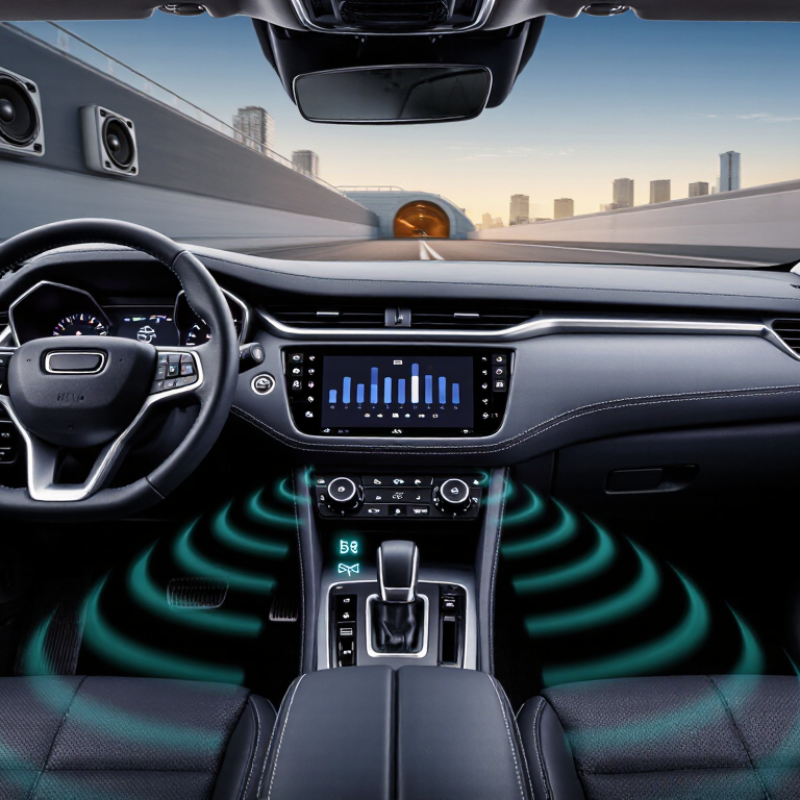
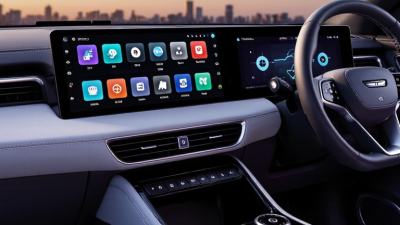
An auto radio is now more than a receiver for AM or FM signals. It acts as the vehicle’s central media and communication interface. Modern units may support digital broadcasting, wireless phone connections, voice commands, navigation, and hands-free calling. A small screen displays station information, album art, maps, and vehicle alerts. The radio sends audio signals to an amplifier, which drives the cabin speakers.
System designs vary widely. Some vehicles use a basic receiver with physical knobs and a simple display. Others use a fully integrated touchscreen connected to cameras, steering-wheel controls, and climate settings. Factory systems usually fit the vehicle neatly, but upgrades can offer better sound adjustment and newer connectivity. Compatibility matters. Wiring, dashboard space, software support, and speaker resistance can affect the installation.
I have found that clear controls are often more valuable than extra features. A system may offer many functions, yet still feel distracting during a night drive. It feels seamless. However, wireless connections can occasionally fail, especially after a phone update or a weak signal. Some audio delays also appear when streaming content. These small problems deserve attention because dependable operation matters more than impressive specifications. An experienced installer should check power output, antenna performance, microphone placement, and safe control access before changing the system.
| System Dimension | Auto Radio Type or Feature | How It Works | Typical Capabilities | Important Considerations |
|---|---|---|---|---|
| Basic Function | Vehicle audio receiver | The receiver selects radio broadcasts or connected audio sources, processes the signal, and sends it to an amplifier and speakers. | Audio playback, source selection, volume control, tuning, and preset stations. | Performance depends on signal quality, speaker configuration, antenna condition, and amplifier capacity. |
| AM Radio | Amplitude modulation reception | Audio information is carried by changes in the amplitude of a radio-frequency carrier wave. | Longer transmission range and useful reception of some talk, news, and local broadcast services. | It is generally more vulnerable to electrical interference and static than FM reception. |
| FM Radio | Frequency modulation reception | Audio information is carried by changes in the frequency of a radio-frequency carrier wave. | Better sound quality than AM for most music and reduced sensitivity to amplitude-based noise. | FM reception is usually more affected by obstructions, distance, and line-of-sight limitations. |
| Digital Broadcast | Digital terrestrial radio | Digitally encoded audio and service data are transmitted through compatible broadcast channels and decoded by the receiver. | Potentially clearer audio, station information, text services, and additional program channels. | Availability varies by country and local coverage; compatible hardware is required. |
| Audio Sources | USB, auxiliary, and wireless inputs | The radio receives digital or analog audio from an external device and routes it through the vehicle audio system. | Playback from mobile devices, storage media, portable players, or other compatible equipment. | File compatibility, connection type, device support, and charging capability vary by system. |
| Wireless Connectivity | Short-range wireless audio connection | Audio and control data are exchanged wirelessly between the receiver and a paired device. | Hands-free calls, wireless music playback, contact access, and basic playback controls. | Features depend on supported profiles, device compatibility, pairing status, and software versions. |
| Smartphone Integration | Projection-based phone interface | The vehicle receiver displays selected phone applications and handles supported controls through a wired or wireless connection. | Navigation, calls, messages, voice commands, and compatible media applications. | Availability depends on the vehicle system, phone operating system, connection method, and regional support. |
| Amplification | Built-in amplifier | The receiver increases the electrical strength of the audio signal before sending it to the speakers. | Basic multi-speaker playback with integrated volume and tone control. | Output capability is limited by the amplifier design, power supply, thermal management, and speaker impedance. |
| Audio Distribution | External or multi-channel amplifier system | A separate amplifier receives low-level or processed audio signals and provides additional power to speaker channels. | Higher output, more speaker channels, stronger bass control, and improved system tuning potential. | Installation may require additional wiring, space, fuses, signal processing, and thermal management. |
| Speaker Layout | Two-channel, multi-channel, or surround-oriented layout | Separate speaker channels reproduce different portions of the audio signal across the vehicle cabin. | Front and rear playback, dedicated low-frequency output, and wider listening coverage. | Cabin acoustics, speaker placement, crossover settings, and phase alignment affect the result. |
| Signal Processing | Equalization and digital sound processing | Electronic processing adjusts frequency balance, delay, level, and other characteristics of the audio signal. | Bass and treble adjustment, preset sound modes, balance, fade, time alignment, and crossover control. | Excessive equalization can increase distortion or reduce available headroom. |
| Display | Monochrome, color, or touchscreen display | The display presents station, source, track, call, navigation, and vehicle-related information. | Preset access, menu navigation, media browsing, backup-camera viewing, and system settings. | Screen size, brightness, viewing angle, touch sensitivity, and interface layout vary considerably. |
| User Controls | Physical controls and steering-wheel controls | Buttons, knobs, touch controls, or remote inputs send commands to the receiver. | Volume adjustment, source selection, track changes, station presets, and voice-command activation. | Physical controls can be easier to operate by feel, while touch interfaces can provide more functions in less space. |
| Voice Operation | Voice command support | A microphone captures speech, and software interprets commands to control supported functions. | Calling, media selection, navigation requests, station changes, and limited system commands. | Recognition quality can be affected by road noise, microphone placement, accents, connectivity, and supported languages. |
| Antenna System | Roof-mounted, embedded, or amplified antenna | The antenna captures radio-frequency signals and passes them to the receiver for tuning and demodulation. | Reception of AM, FM, and, where supported, digital terrestrial broadcasts. | Signal strength can be influenced by antenna location, vehicle structure, cable condition, terrain, and interference. |
| Installation Format | Factory-integrated or replacement receiver | A factory-integrated system is designed with the vehicle, while a replacement receiver is installed in an existing dashboard opening or module. | Integrated systems may connect with vehicle settings; replacement units may provide updated audio and connectivity features. | Compatibility can involve dashboard dimensions, wiring, steering controls, antennas, security systems, and vehicle data networks. |
| Power Supply | Vehicle low-voltage electrical system | The radio converts electrical power from the vehicle battery and charging system into regulated power for its circuits. | Operation while the vehicle is running or, for limited periods, when the accessory circuit is active. | Voltage fluctuations, poor grounding, wiring faults, and battery condition can cause noise or intermittent operation. |
| Safety Integration | Hands-free operation and camera input | The receiver uses microphones, vehicle signals, or camera feeds to support safer interaction and rear visibility. | Hands-free calls, voice commands, parking-camera display, and automatic audio muting for alerts. | These functions assist the driver but do not replace visual checks or attentive driving. |
| System Variation | Standard, premium, connected, or fleet-oriented system | Systems are configured according to vehicle cost, cabin design, connectivity requirements, and intended use. | Options range from basic broadcast reception to multi-zone audio, advanced processing, navigation, and connected services. | More features can increase installation complexity, software dependence, power demand, and service requirements. |

Note: Feature availability and specifications vary according to vehicle design, production year, market regulations, compatible devices, and system configuration.