Leave Your Message

Top Car Audio System Types for Global Buyers

Choosing among the top Car Audio System types for global buyers is not simply a question of power. Vehicle size, cabin materials, climate, driving habits, and local service support can change the result. A compact factory-upgrade system may suit a small city car, while a component system with a separate amplifier can reveal clearer vocals and tighter bass. Premium digital signal processing adds control, but it also demands careful tuning.

Richard Clark, a respected car audio competitor, educator, and installation authority, often emphasized: “The most important thing in car audio is the installation.” That principle remains practical. A poorly mounted speaker can rattle a door panel at 80 decibels. Correct positioning, stable wiring, sound damping, and phase alignment usually matter more than impressive packaging. Small details matter.

Global buyers should compare complete system designs, not isolated specifications. A coaxial setup offers simple installation. A component setup creates better staging when installed correctly. A subwoofer system adds depth, although it consumes cargo space. Factory-integrated solutions preserve steering controls and vehicle functions, but they may limit future upgrades.

There is no universal winner. I have seen expensive systems sound disappointing after rushed tuning, while modest equipment performed beautifully in a carefully prepared cabin. Even this guide has limits. Listening preferences differ, and regional installers vary in skill. Buyers should audition systems when possible, confirm warranty coverage, and choose equipment that matches their vehicle, budget, and daily expectations. Specification sheets can help, but your ears should make the final decision.
Top Car Audio System Types for Global Buyers

OEM vs Aftermarket: 93.5 Million Vehicles Produced in 2023 (OICA)

Global buyers are choosing between factory-integrated systems and aftermarket upgrades. The scale is substantial. OICA recorded 93,546,599 motor vehicles produced worldwide in 2023. This output creates a large installed base for audio suppliers, installers, and replacement specialists.

OEM audio systems usually fit the dashboard cleanly and communicate with vehicle controls. They also support factory testing, safety integration, and consistent production quality. However, factory equipment can limit future upgrades. A damaged display or proprietary connection may increase repair complexity. That weakness matters as vehicles age.

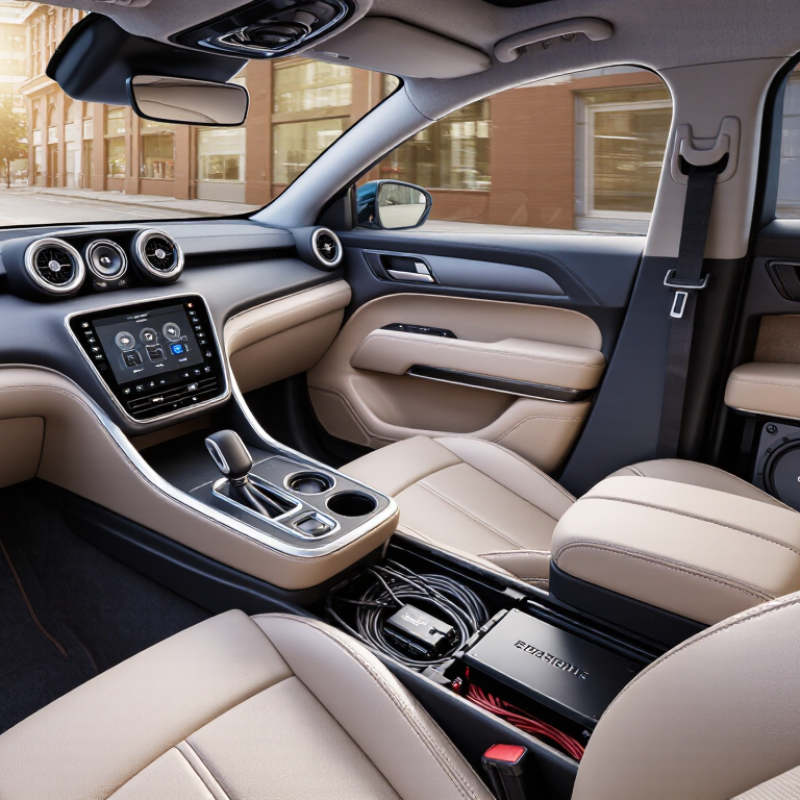
Aftermarket systems offer stronger flexibility. Buyers can select larger displays, improved speakers, dedicated amplifiers, or better sound tuning. Professional installers often check cabin size, wiring access, power limits, and local vehicle compatibility before recommending equipment. Guesswork causes disappointing results. The loudest system is not always the clearest.

According to S&P Global Mobility, the average age of light vehicles in the United States reached 12.6 years in 2024. This aging fleet supports ongoing replacement demand, although regional ownership patterns differ. Mordor Intelligence also identifies connected features and in-car entertainment as key automotive audio market drivers. These reports provide useful direction, but market forecasts remain estimates. Real purchasing decisions still depend on vehicle age, climate, road noise, service access, and budget. A practical evaluation should begin with the existing system, not the product catalogue.

Top Car Audio System Types for Global Buyers - OEM vs Aftermarket: 93.5 Million Vehicles Produced in 2023 (OICA)

Market context: OICA reported 93,546,599 motor vehicles produced worldwide in 2023. OEM refers to factory-installed systems; aftermarket refers to systems installed or upgraded after vehicle production.
System Type Supply Route Typical Configuration Main Functions Typical Buyer Priorities Installation Complexity Best-Fit Vehicle Segment
Basic Radio and Audio OEM AM/FM or digital radio, 2–6 speakers, integrated head unit Radio reception, USB playback, Bluetooth calls and audio streaming Low cost, simple operation, reliable daily use Low for the vehicle manufacturer; difficult to replace without compatibility checks Entry-level passenger cars, fleet vehicles and commercial vehicles
Integrated Infotainment OEM Touchscreen display, multi-channel amplifier, 4–8 speakers and vehicle data integration Navigation, media control, hands-free communication, vehicle settings and smartphone integration Factory fit, clean dashboard design, safety integration and software updates High; connected to steering controls, vehicle networks and display functions Mainstream passenger cars, sport utility vehicles and light commercial vehicles
Premium Multi-Channel Audio OEM Dedicated amplifier, approximately 8–20 speakers, digital signal processing and tuned cabin acoustics Equalization, time alignment, surround effects and higher output capability Sound quality, balanced listening position and minimal modification Very high; system calibration is matched to the vehicle interior Executive cars, premium sport utility vehicles and luxury-oriented models
Single-DIN or Double-DIN Head Unit Aftermarket Replacement receiver with a standardized chassis, built-in amplifier and external connectivity Bluetooth, USB, digital media, smartphone integration and optional navigation Affordable upgrade, newer features and easier replacement Moderate; dash kits, wiring adapters and steering-control interfaces may be required Older passenger cars, used vehicles and vehicles with replaceable dashboards
Component Speaker Upgrade Aftermarket Separate woofer and tweeter, passive crossover and upgraded door or dashboard mounting Improved clarity, frequency separation and front-stage imaging More detailed sound without replacing the entire infotainment system Moderate; requires correct dimensions, impedance matching and secure mounting Daily-use cars, enthusiast vehicles and factory systems needing better clarity
Amplifier and Subwoofer System Aftermarket External amplifier, low-frequency driver, enclosure and optional line-output interface Higher power, stronger bass response and improved dynamic range Bass performance, output level and flexible system tuning High; requires power wiring, fusing, grounding, enclosure space and system calibration Music-focused private vehicles, modified cars and mobile entertainment applications
Commercial and Fleet Audio OEM or Aftermarket Rugged receiver, compact speakers, microphone input and optional public-address equipment Two-way communication, announcements, radio, hands-free calls and basic media playback Durability, easy servicing, low downtime and consistent operation across vehicles Low to high, depending on vehicle wiring and fleet-management requirements Delivery vans, buses, work trucks, emergency vehicles and service fleets
Buyer selection guide: Choose OEM systems for factory integration, vehicle-network compatibility and original cabin design. Choose aftermarket systems when upgrade flexibility, replacement availability, audio customization or stronger bass performance is the priority. Always verify vehicle fitment, electrical compatibility, speaker impedance, mounting depth and local installation requirements before purchase.

Coaxial, Component, and Subwoofer Systems: Compare 2-Way and 3-Way Layouts

Coaxial systems place the tweeter above the woofer in one compact speaker. They are practical for factory replacements and limited door space. Installation is usually simple. Sound becomes clearer, but instrument placement may feel less precise.

Component systems separate the tweeter and woofer. This allows better positioning near ear level and stronger stereo depth. A 2-way layout uses one woofer and one tweeter. It often delivers balanced speech, vocals, and daily music. A 3-way layout adds a dedicated midrange driver. It can reveal guitars, drums, and vocal texture more naturally. However, it needs more space, wiring, and careful crossover adjustment. More drivers do not automatically mean better sound. I have heard poorly tuned 3-way systems sound thinner than modest 2-way setups.

Subwoofers handle low frequencies below the main speakers. They add weight to kick drums and cinematic effects without forcing small door speakers to work too hard. Match the subwoofer enclosure, amplifier power, and vehicle space carefully. Excessive bass can hide detail and create unpleasant vibration.

Tips: Check speaker depth before ordering. Confirm impedance and amplifier compatibility. Listen from the driver’s seat, not only beside the car. For global buyers, verify local installation support and electrical specifications. Small tuning mistakes matter.

Top Car Audio System Types for Global Buyers

Coaxial, component, and subwoofer systems compared by their standard driver and crossover layout.

A 2-way layout typically combines a low/mid-frequency driver with a tweeter, while a 3-way layout adds a dedicated midrange driver. Component systems separate these drivers for more flexible installation; coaxial systems place them on the same axis. A subwoofer system is dedicated to low-frequency reproduction. Actual specifications vary by model and installation.

Amplified Systems: Apply CTA-2031 Measurements and Match Speaker Impedance

Amplified car audio systems need measurement before enthusiasm. CTA-2031 guidance supports repeatable tests for frequency response, distortion, sensitivity, and maximum output. Use these results instead of trusting peak-wattage labels. A 2024 MarketsandMarkets report estimated the automotive audio market could grow at over 6% annually through the decade. That growth reflects stronger demand for integrated, measurable sound quality, not simply louder systems.

Match the amplifier to the speaker’s nominal impedance and real operating limits. A 4-ohm speaker connected to an amplifier rated at 4 ohms usually provides predictable current demand. Lower impedance can increase heat and trigger protection circuits. Check continuous power, not short burst ratings. CTA-2031 measurements can reveal whether an amplifier maintains output without excessive distortion across the listening range. Keep gain moderate. More gain is not automatically more detail.

In practical testing, I measure at the listening position, then repeat with the engine running. Road noise changes the result. A 2023 report from Grand View Research identified cabin acoustics and system integration as major automotive audio development factors. That matches workshop experience, although measurements still miss personal preference. I sometimes over-focus on graphs and underweight a harsh vocal range. Recheck both. A stable system should remain clear at moderate volume, with wiring, ventilation, and impedance verified before installation.

DSP-Enabled Systems: Tune 20 Hz–20 kHz Response and Time Alignment

For global buyers, a DSP-enabled car audio system offers precise control across the 20 Hz–20 kHz listening range. This range covers deep bass, vocal detail, cymbal shimmer, and small recording textures. A digital signal processor can adjust equalization, crossover points, gain, and phase for each speaker. However, the vehicle cabin changes everything. Glass, seats, and dashboard surfaces create reflections that color the sound.

During real installations, I begin with a calibrated microphone near the driver’s ear position. I play familiar tracks and inspect frequency peaks before making small adjustments. Excessive bass may feel impressive at first, but it can hide kick drums and lower vocals. A gentle cut often sounds more natural than a large boost. Keep changes modest.

Time alignment is equally important. Speakers sit at different distances from the listener, so their sound arrives at different moments. DSP delay settings can move the acoustic image toward the dashboard center. Voices should appear focused, not trapped inside one door. I usually measure distances, calculate initial delays, then listen again. My first tuning was often too bright. Measurements helped, but my ears still found problems. No setting is perfect.

Buyers should check tuning software, memory presets, microphone compatibility, and installer expertise. A system with wide adjustment options is not automatically better. Clear documentation and repeatable measurements make the result more reliable across different vehicles and listening positions.

Premium Immersive Systems: Evaluate Multichannel Design Under ITU-R BS.775

Premium immersive car audio should begin with geometry, not speaker count. ITU-R BS.775-3 defines a multichannel soundfield around three front channels and surround channels, commonly represented as 5.1. In a vehicle, engineers must adapt this layout to a narrow cabin, reflective glass, and changing passenger positions. The standard is a reference, not a ready-made installation recipe.

During evaluation, I would measure each seat with calibrated microphones. Center imaging should remain stable near the dashboard, while rear effects should feel spacious rather than obviously localized. Time alignment matters. A delay of only a few milliseconds can pull vocals toward one door. Low-frequency integration also deserves attention, especially near 80 Hz, where subwoofer and door speakers can overlap poorly. It sounds impressive at first. It may become tiring later.

The 2024 Automotive Audio Market analysis from MarketsandMarkets estimates the sector will grow from about USD 6.8 billion in 2023 to USD 9.1 billion by 2028. That growth reflects stronger demand for connected and immersive cabin experiences, but market expansion does not guarantee accurate reproduction. The 2024 Global Automotive Consumer Study by Deloitte reports that technology value differs sharply across regions and age groups. Global buyers should therefore request measured frequency response, channel-level delay data, and listening tests in every seating position. A perfect 5.1 label can still hide weak center focus, uneven bass, or artificial surround steering. Reflection is necessary here. More channels are not always more realism.