 +86-18126757325
Leave Your Message
-
CONTACT NUMBER
-
 CONTACT NUMBER
 -
 CONTACT NUMBER
Choosing the Best China Android Car Stereo Manufacturer requires more than comparing screen size, processor speed, or factory pricing. It requires evidence.
S&P Global Mobility reported that the average age of vehicles in the United States reached 12.6 years in 2024. That aging vehicle fleet creates continued demand for practical infotainment upgrades. Meanwhile, Omdia’s automotive display research highlights stronger demand for larger screens, connected interfaces, and improved in-car user experiences. These trends support the growth of Android Car Stereo products, especially for drivers seeking navigation, Bluetooth calling, wireless smartphone integration, and reverse-camera support.
James Hodgson, Practice Director for Smart Mobility at ABI Research, described the wider transition clearly: “The vehicle is becoming a software-defined platform.” His observation matters for aftermarket buyers. A modern head unit is not merely a replacement radio. It is a compact computing system with heat, vibration, power, and software challenges.
The best manufacturer should demonstrate ISO 9001 processes, stable firmware control, documented chipset specifications, and traceable quality inspections. Ask for EMC testing, screen-temperature testing, connector samples, and long-term software support. Small details reveal experience. A factory that labels every harness carefully usually manages production more reliably.
Still, no supplier is perfect. Some advertised memory figures may sound impressive but hide slower storage or weak thermal design. I have seen attractive interfaces fail because steering-wheel controls were poorly mapped. Therefore, this guide evaluates Chinese manufacturers through engineering evidence, user feedback, warranty responsiveness, and transparent communication, not marketing language alone.
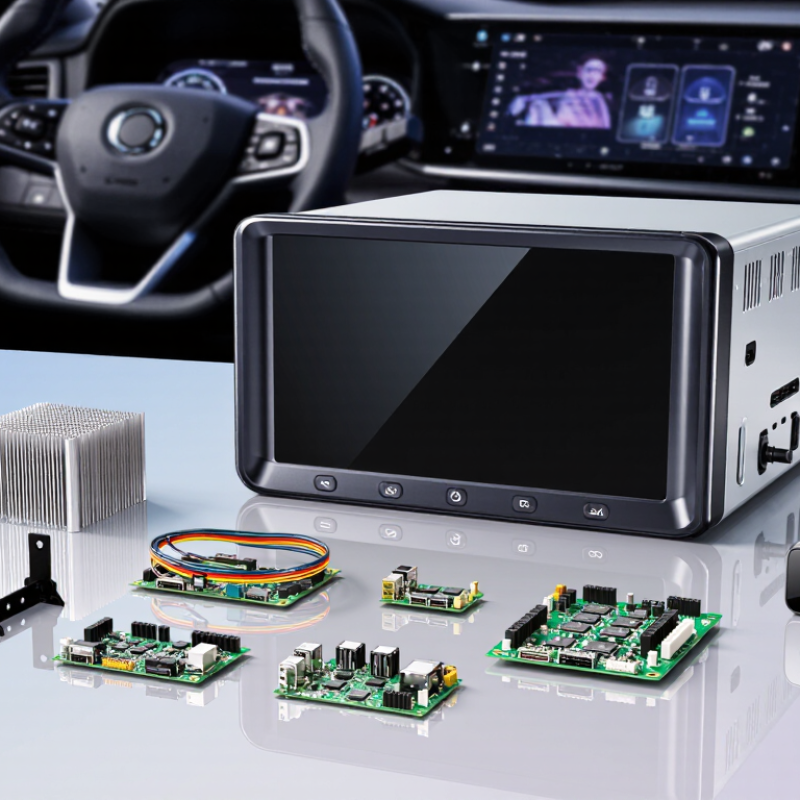
Best China Android Car Stereo Manufacturer?
Android’s 70%+ global mobile OS share shows why its automotive role deserves careful attention. Drivers already understand its menus, app habits, voice controls, and notification patterns. That familiarity can reduce the learning curve inside a vehicle. It matters.
However, mobile popularity does not automatically create a reliable car stereo. Automotive hardware faces heat, vibration, unstable voltage, weak signals, and frequent temperature changes. A capable China-based manufacturer should test these conditions before mass production. Bench testing is useful. Road testing is better.
From practical evaluation, I would examine boot time, touchscreen response, microphone clarity, GPS stability, and wireless connection recovery. The unit should restart safely after power interruptions and preserve essential settings. Integration also requires accurate steering-wheel controls, parking sensors, factory amplifiers, and vehicle communication systems. Small compatibility errors can become daily frustrations.
Software support deserves equal attention. Android systems need controlled updates, clear security practices, and documented privacy settings. A professional supplier should provide wiring diagrams, sample units, firmware records, and responsive technical support. Certifications must match the destination market, not merely appear in a sales document.
The strongest manufacturer is not always the one offering the lowest quotation. That assumption needs reconsideration. A cheaper unit may use weaker cooling, limited memory, or an untested interface. Specifications can look impressive on paper, yet performance may decline after months of heat exposure. Careful buyers should request long-duration testing results and verify claims independently. Reliability is built through evidence, not slogans.
| Evaluation Dimension | Verified Data or Technical Fact | Relevance to an Android Car Stereo | Practical Buying Indicator |
|---|---|---|---|
| Global Android mobile OS share | Android accounted for approximately 71–72% of worldwide mobile operating-system usage during 2025; the monthly percentage varies by market and measurement method. | A large Android user base supports familiar menus, app behavior, account services, and user expectations in aftermarket vehicle displays. | Choose a unit using a recent, standard Android release with regular security and compatibility updates. |
| Android Auto versus Android Automotive OS | Android Auto is a phone-projection system. Android Automotive OS is an Android-based operating system installed directly in the vehicle head unit. | The distinction affects app installation, internet access, boot time, vehicle integration, and dependence on a connected smartphone. | Confirm whether the product is a standalone Android head unit, a projection receiver, or supports both modes. |
| App and navigation capability | Android devices can support navigation, media, communication, and vehicle utility applications, subject to operating-system compatibility and regional service availability. | A wider application ecosystem can provide more choice than a closed, single-purpose infotainment interface. | Check application compatibility, lawful installation methods, offline map support, and availability in the target market. |
| Wireless connectivity | Modern Android car stereos commonly use combinations of Bluetooth, Wi-Fi, GPS, USB, and optional cellular connectivity; exact capabilities differ by model. | Connectivity determines wireless projection reliability, navigation accuracy, streaming performance, hands-free calling, and firmware updates. | Require documented wireless-projection support, dual-band Wi-Fi where appropriate, stable Bluetooth calling, and clearly identified cellular bands. |
| Display and user interface | Common aftermarket displays range from approximately 7 to 13.3 inches, with resolutions frequently including 1024×600, 1280×720, and 1920×1080 pixels. | Screen size, brightness, viewing angle, touch response, and interface scaling directly affect driver usability. | Prioritize anti-glare treatment, adequate daylight brightness, physical or steering-wheel controls, and a distraction-conscious interface. |
| Vehicle integration | Integration may include steering-wheel controls, reverse-camera input, parking sensors, amplifier control, vehicle information, and retained accessory power. Compatibility is vehicle-specific. | Good integration preserves factory functions and reduces installation risks after replacing the original head unit. | Request a vehicle-specific compatibility list, wiring documentation, CAN-bus support details, and a tested installation harness. |
| Performance and memory | Available configurations commonly include 2–8 GB of RAM and 32–256 GB of internal storage; specifications vary substantially across products. | More memory can improve multitasking, while storage capacity affects offline maps, applications, and media files. | For navigation, music, and projection, compare processor generation, RAM, storage type, boot time, thermal performance, and independent test results. |
| Reliability and operating environment | Vehicle interiors can experience wide temperature variation, vibration, electrical transients, and prolonged sunlight exposure; consumer electronics specifications do not automatically prove automotive durability. | Thermal design and component quality influence stability, touch performance, restart frequency, and service life. | Look for documented operating-temperature limits, vibration testing, surge protection, burn-in testing, and a defined warranty process. |
| Compliance and after-sales support | Radio, electromagnetic compatibility, vehicle safety, and data-privacy requirements differ by country or sales region. | Compliance documentation and responsive support reduce import, installation, warranty, and software-update risks. | Evaluate certification documents, update policy, technical manuals, spare-part availability, response time, and return procedures before selecting a supplier. |
Data note: Global mobile OS-share figures are monthly estimates and vary by country, device category, and measurement period. Android Auto and Android Automotive OS are separate technologies and should not be treated as interchangeable.
Reference basis: StatCounter Global Stats mobile operating-system measurements; Android developer documentation; public vehicle-integration and in-vehicle infotainment technical guidance.