How to Choose the Best Car Audio System for Your Needs?
Choosing the best car audio system can feel overwhelming. With so many options available, making the right choice is crucial. A quality car audio setup enhances your driving experience, bringing music and sound to life. However, not all systems will meet your needs.
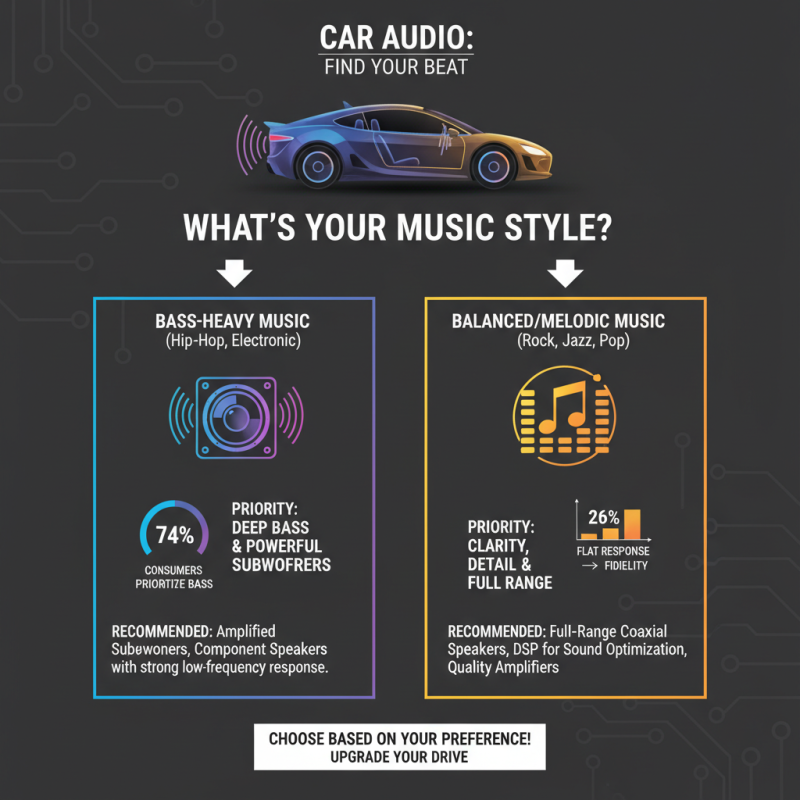
Consider your preferences. Do you prefer deep bass or clear highs? These preferences directly influence your choice. You should also think about your vehicle’s space. Bigger cars may accommodate larger speakers. If your car is compact, you might require a different approach.
Keep in mind, budget is an important factor. Higher prices don’t always guarantee better quality. Research various brands and read reviews for guidance. It’s easy to get lost in specifications, so take your time. Reflect on what truly matters to you in car audio. Finding the right balance between performance and price will be rewarding. With careful consideration, you can create an audio experience tailored to your needs.

Understanding Your Audio Preferences and Requirements
Choosing the best car audio system starts with understanding your audio preferences. Consider what genres you often listen to. For instance, bass-heavy music demands powerful subwoofers. Reports show that 74% of consumers prioritize deep bass for genres like hip-hop and electronic.
Evaluate your listening environment too. A spacious vehicle might require different speakers than a compact car. Quality over quantity can make a difference. Many users report that a well-placed pair of mid-range speakers offers significant clarity, even over a full system.
Think about how you use your system. Do you often drive alone? Or do you share rides with friends? For solo listeners, personalization can enhance the experience. Utilize sound staging and audio tuning features to craft your perfect sound. Yet, be cautious. Overdoing the equalization might lead to a less natural sound. Balancing preferences and technical specifications is crucial.
Key Features to Look For in Car Audio Systems
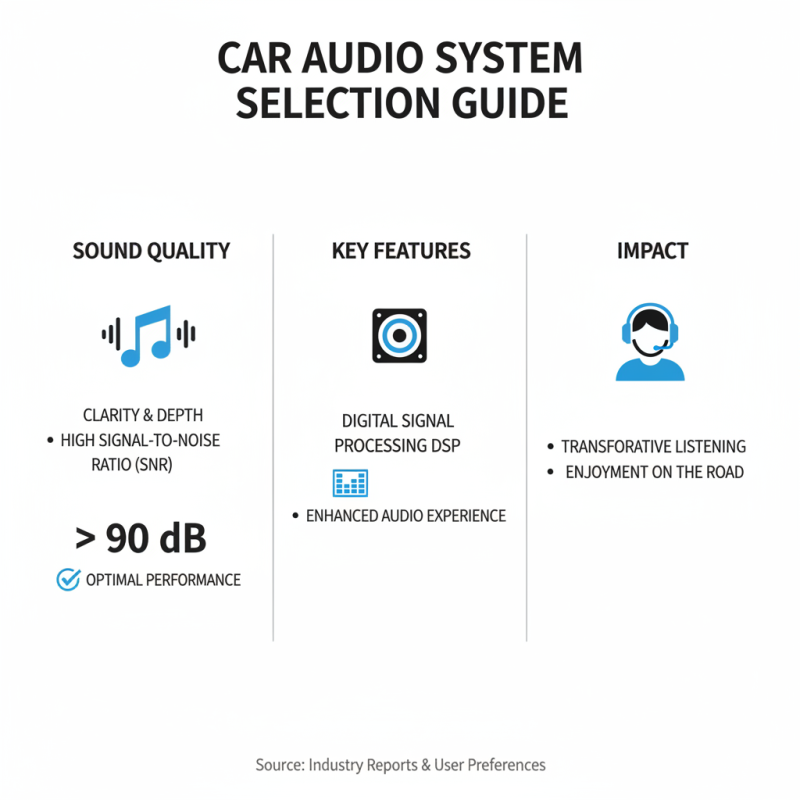
When selecting a car audio system, key features can significantly impact your listening experience. Consider sound quality as a primary factor. According to industry reports, many users prioritize clarity and depth in audio. A system with a higher signal-to-noise ratio (SNR) offers clearer sound. Aim for an SNR above 90 dB for optimal performance. Many systems also include digital signal processing (DSP) features, enhancing the overall audio experience.
Power output is another critical aspect. Systems usually range from 50 to 100 watts per channel. Research shows that a higher wattage can create a fuller sound without distortion. Subwoofer integration is essential for bass lovers. Many models feature built-in subwoofers or offer flexible connectivity for external ones. It's essential to assess how well these components work together to avoid mismatched audio outputs.
Lastly, don't overlook connectivity options. Bluetooth and auxiliary inputs are standard, but not all systems deliver seamless connections. A study found that 30% of consumers experience connectivity issues with their devices. It's worth spending time ensuring compatibility with your smartphone or other devices. Understanding these features can help you avoid common pitfalls and make a more informed decision.
Choosing the Right Type of Car Audio System: Components Explained
When selecting a car audio system, understanding the components is crucial. The core components include the head unit, speakers, amplifiers, and subwoofers. Each piece plays a vital role in overall sound quality.
The head unit, or stereo system, is the control center. It impacts your user experience significantly. A model with Bluetooth and advanced connectivity options may be essential for most users. According to industry reports, over 70% of consumers prioritize connectivity features. Speakers come next. They convert electrical signals to sound, so high-quality speakers enhance clarity. Many vehicle owners overlook this aspect, leading to poor audio performance.
Amplifiers boost sound quality and volume. Without them, your system might underperform, especially at higher volumes. Studies suggest that adding an amplifier can improve sound fidelity by up to 30%. Subwoofers are crucial for deep bass. If you're a bass enthusiast, investing in a good subwoofer is vital. However, improper installation can lead to sound distortion. Careful planning and understanding each component can help avoid pitfalls and ensure you choose the right setup for an enjoyable audio experience.
Car Audio System Component Performance Comparison
This bar chart compares different components of car audio systems based on their performance ratings. The components include Head Unit, Speakers, Amplifier, Subwoofer, and Wiring. Each component is rated on a scale from 1 to 10, reflecting its overall audio quality, ease of installation, and durability.
Budgeting for Your Car Audio System: What to Consider
When budgeting for a car audio system, consider your priorities. Think about the features you want. Are you looking for sound quality, Bluetooth connectivity, or perhaps a powerful subwoofer? Define your needs before diving into options.
Tips: Set a realistic budget. Consider how much you are willing to spend. Also, anticipate installation costs. This can add up quickly.
It’s easy to get carried away with desires. You may want a high-end system, but is it necessary? Weigh your desires against your budget. You might be surprised by what you can achieve with a mid-range setup.
Tips: Look for deals and discounts. Many sellers offer promotions. This can help stretch your budget. Always read reviews before purchasing. They can provide insights into your choices.
How to Choose the Best Car Audio System for Your Needs? - Budgeting for Your Car Audio System: What to Consider
| Feature |
Description |
Estimated Cost |
| Head Unit |
The main control unit for audio, includes radio, CD player, and Bluetooth connectivity. |
$100 - $500 |
| Speakers |
Quality speakers enhance sound clarity and volume in your vehicle. |
$50 - $300 per pair |
| Subwoofer |
Provides deep bass sounds, typically installed in the trunk or under seats. |
$150 - $600 |
| Amplifier |
Boosts power to speakers and subwoofers for better sound performance. |
$100 - $500 |
| Installation |
Professional installation ensures optimal performance and avoids damage to your vehicle. |
$50 - $200 |
Installing and Fine-Tuning Your Car Audio System for Optimal Sound
Installing a car audio system can significantly enhance your driving experience. Fine-tuning it for optimal sound is crucial. Research shows that a well-installed system can improve sound quality by up to 30%. Getting the right adjustments can make all the difference.
Begin by positioning your speakers correctly. Aim for the ear level when seated. Experiment with angles to find the best spot. This can lead to a more immersive listening experience. Adjust the equalizer settings carefully. Misconfigured settings can cause distortion, reducing overall sound quality.
Tip: Test different genres for balance. A track with a wide dynamic range can reveal defects in balance.
Don’t forget about soundproofing your vehicle. Proper insulation can reduce outside noise and enhance clarity. According to industry reports, adding sound-deadening material can increase fidelity by up to 25%.
Tip: Always listen at various volumes. Sometimes, clarity can get lost at high levels. Small adjustments can make a big difference in sound texture and precision.

 +86-18126757325
 CONTACT NUMBER
 CONTACT NUMBER