How to Choose the Best Bluetooth Car Stereo for Your Vehicle?
In today's fast-paced world, Bluetooth Car Stereos have become essential tech in vehicles. According to a report by MarketsandMarkets, the global automotive infotainment system market is projected to reach $39.2 billion by 2027, driven largely by Bluetooth-connected devices. As cars become smarter, the demand for Bluetooth audio systems has skyrocketed.
Choosing the right Bluetooth Car Stereo can significantly enhance your driving experience. Features like hands-free calling, music streaming, and connectivity options are crucial. However, not all systems perform equally. Some users find their Bluetooth connections drop frequently or lack sound quality. These are valid concerns that need addressing.
When selecting a Bluetooth Car Stereo, consider compatibility and usability. Check if it seamlessly integrates with your devices. Also, pay attention to sound enhancements and user interface. In an industry full of choices, making the right decision can be overwhelming. Yet, with careful consideration, you can find a unit that fits both your car and lifestyle.
Understanding Your Vehicle’s Compatibility with Bluetooth Stereos
When choosing a Bluetooth car stereo, understanding compatibility is crucial. Start by checking your vehicle’s make and model. Some cars have unique wiring systems that might complicate installation. Measure the dashboard space to ensure your new stereo fits well. Compatibility goes beyond size; it includes power requirements and additional features.
Modern Bluetooth units often support various audio formats. Verify if your vehicle’s wiring harness is compatible with these formats. It's essential to pay attention to features like hands-free calling and streaming music. Installations can involve unexpected challenges. For instance, older cars might lack the necessary power supply. An adapter could be needed, which adds complexity.
Be mindful of sound quality. Some systems offer advanced sound features, while others may not perform as expected. Testing the stereo before installing it in your vehicle can save you headaches. If possible, try listening to audio samples with the same unit in a similar vehicle. This helps gauge performance and ensures the stereo will meet your needs while driving.
Evaluating Key Features of Bluetooth Car Stereos
When evaluating Bluetooth car stereos, the first key feature to consider is sound quality. Look for models with high wattage and supported audio formats. A clear sound can greatly enhance your driving experience. Pay attention to the equalizer settings, as these allow customization based on your preferences. It’s frustrating to spend money on a stereo that doesn’t sound good. Listening to demos in-store can save you from a poor choice later.
Compatibility is also crucial. Ensure the stereo fits your vehicle’s specifications. Some stereos may require adapters or special mounting kits. This compatibility can be tricky and often overlooked. Smartphone integration is another must-have feature. Many units support apps for easy access to navigation and music. However, not all systems work seamlessly with every phone. Testing your phone’s connectivity is a good idea before finalizing your decision.
Lastly, consider usability and interface. A user-friendly touchscreen can make a big difference. Voice commands are helpful but not always reliable. Think about how often you’ll need to interact with the stereo while driving. Distracted driving is a serious issue, so prioritize a setup that minimizes distractions. Choosing the right Bluetooth car stereo might take time, but a well-thought-out decision will pay off in the long run.
Assessing Sound Quality and Output Power
When selecting a Bluetooth car stereo, sound quality is paramount. Reports indicate that around 68% of consumers prioritize audio performance. Key factors include clarity, bass response, and volume. A stereo’s output power, measured in watts, significantly affects these aspects. Stereos with higher output power can deliver clearer sound, even at high volumes. For instance, a system with 50 watts per channel usually provides a noticeable improvement over a 20-watt system.
It’s critical to find the right balance between power and sound quality. Some units may boast high wattage but lack fine-tuning options, which can lead to distortion at peak levels. In fact, data shows that listeners are often more satisfied with well-balanced systems than those with raw power. Features like equalizers and crossovers allow users to customize the listening experience. Research shows that 57% of audiophiles prefer adjustable sound settings over just loud output.
Quality materials in speaker construction also play a role. Cheaper components can produce muddled sound, limiting your listening enjoyment. Often, consumers might overlook this but it drastically affects overall audio experience. Investing in quality speakers along with the stereo can ensure better sound, creating a more enjoyable atmosphere in the car. Decision-making should involve careful consideration of both specs and real-world performance to find the ideal match for your vehicle.
How to Choose the Best Bluetooth Car Stereo for Your Vehicle?
| Feature |
Description |
Rating (1-5) |
| Sound Quality |
Clarity of sound and bass response, minimal distortion |
4.5 |
| Output Power |
Measured in watts, ensures enough power for speakers |
4.2 |
| Bluetooth Range |
Distance from which devices can connect, typically up to 33 feet |
4.0 |
| Ease of Use |
User-friendly interface and controls, quick setup |
4.7 |
| Connection Options |
Includes USB, AUX, and SD card slots for versatility |
4.3 |
| Price |
Cost-effectiveness considering features and performance |
4.1 |
Exploring Installation Options for Bluetooth Car Stereos
When choosing a Bluetooth car stereo, installation options can greatly impact your decision. Professional installation might seem convenient, but it often adds to the overall cost. According to a 2022 industry report, around 35% of consumers prefer DIY installations to save money. Understanding your vehicle's dashboard and wiring system is essential for this route. Yet, only 21% feel confident tackling installation alone.
Many car owners face challenges with compatibility. Some stereos may not fit seamlessly into all car models. A 2023 survey found that 40% of users experienced installation issues due to mismatched sizes and connectors. This can lead to frustration, making it crucial to research compatibility before purchasing. Consider utilizing online forums or instructional videos for guidance.
It’s important to remember that not all installations will go smoothly. Errors in wiring or misplacement of components can happen. In fact, nearly 18% of DIY installers reported having to redo their work. This highlights the need for careful planning. Taking time to measure and understand the installation process can make a significant difference in outcome.
Bluetooth Car Stereo Features Comparison
Comparing Prices and Brands for the Best Value
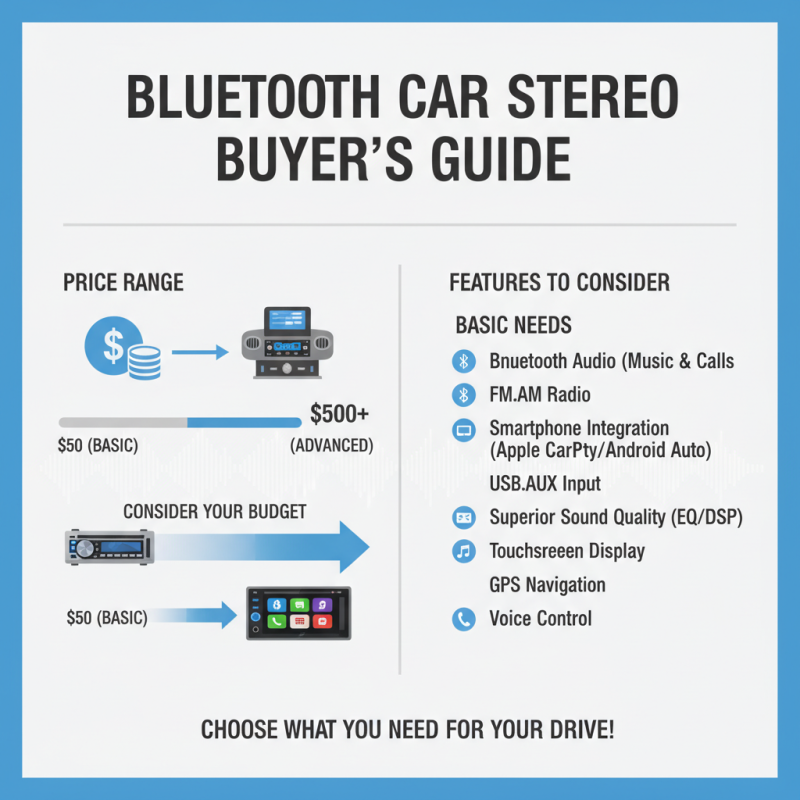
When choosing a Bluetooth car stereo, price is often a major consideration. Research shows that prices can range from $50 to over $500. It’s crucial to evaluate what features you need. High-end models often include advanced functions like smartphone integration and superior sound quality. However, you might only need basic options for everyday use.
Comparing brands can be overwhelming. Each brand presents unique features and varying price points. According to industry reports, up to 70% of consumers choose brands they are already familiar with. This suggests that brand loyalty plays a strong role. However, new brands often offer competitive pricing while delivering excellent features. Don’t disregard lesser-known brands; they can provide great value.
Tips: Look for reviews that focus on real user experiences. Check online forums and feedback. This can provide insights beyond marketing claims. Remember to consider warranty details too; a longer warranty could indicate greater reliability. It's wise to balance cost with quality. Sometimes, a cheaper stereo may not last as long, leading to higher costs in the long run. Reflect on what you really need versus what’s trendy. Balancing these can lead to smarter purchasing decisions.

 +86-18126757325
 CONTACT NUMBER
 CONTACT NUMBER