How to Choose the Best Car Audio System for Your Vehicle
When it comes to enhancing the driving experience, one of the most significant upgrades you can make is to your vehicle's audio setup. A high-quality Car Audio System not only brings your favorite music to life but also transforms your time on the road into a more enjoyable and immersive experience. With numerous options available in the market today, choosing the right Car Audio System can be both exciting and overwhelming.
Understanding your personal preferences, the specifications of your vehicle, and the type of sound quality you desire are essential steps in the decision-making process. Factors such as the size of the speakers, the power of the amplifier, and the compatibility with other devices play critical roles in ensuring you get the most out of your audio equipment. This guide will provide valuable insights into selecting the best Car Audio System tailored to your needs, allowing you to fully enjoy your audio journey while driving.

Understanding Your Vehicle's Audio Requirements
Understanding the unique audio requirements of your vehicle is the first step toward selecting the best car audio system. Each vehicle has a distinct acoustic environment influenced by its size, shape, and interior materials. For instance, compact cars may require a more powerful system to overcome road noise, while larger SUVs might benefit from a balanced setup that evenly distributes sound throughout the cabin. It's crucial to assess the listening preferences of the occupants as well; some may prioritize bass-heavy playback for genres like hip-hop, while others might seek clarity for vocal-centric music.
Additionally, consider the factory audio system already present in your vehicle. Many modern cars come with a built-in setup that may not meet the expectations of audiophiles. Evaluating the current sound quality and identifying specific pain points, such as weak bass response or lack of detail in the highs, can provide insights into what upgrades are necessary. Furthermore, examining the space available for additional components, such as amplifiers or subwoofers, is essential, as this will influence not only the selection process but also the overall sound performance and satisfaction with the new audio system.
How to Choose the Best Car Audio System for Your Vehicle - Understanding Your Vehicle's Audio Requirements
| Vehicle Type |
Audio Output (Watts) |
Speaker Size (Inches) |
Number of Channels |
Connectivity Options |
| Sedan |
80 - 120 |
6.5 |
4 |
Bluetooth, AUX, USB |
| SUV |
100 - 200 |
6.5 / 8 |
6 |
Bluetooth, AUX, USB, CD |
| Truck |
120 - 300 |
6.5 / 10 |
4 - 8 |
Bluetooth, AUX, USB, CD, HD Radio |
| Coupe |
70 - 150 |
6.5 |
4 |
Bluetooth, AUX, USB |
| Convertible |
80 - 160 |
6.5 |
4 |
Bluetooth, AUX, USB |
Key Features to Look for in a Car Audio System
When choosing a car audio system, it's essential to focus on key features that will enhance your listening experience. First and foremost, the sound quality should be your primary consideration. Look for systems that offer a high level of clarity and depth, often indicated by the power output measured in watts RMS. The speakers play a crucial role in sound reproduction, so selecting a set that includes a good combination of woofers, tweeters, and subwoofers can significantly improve the overall audio experience.
Another important feature to consider is connectivity. Modern car audio systems should provide multiple options for connecting your devices, including Bluetooth, USB ports, and auxiliary inputs. This versatility allows you to easily play music from various sources, whether it’s your smartphone, tablet, or USB drive. Additionally, consider systems that provide integration with smartphone applications, enabling you to access your favorite playlists and navigation apps seamlessly from your dashboard.
Lastly, user interface and ease of installation are vital for a positive user experience. Look for systems with intuitive controls, clear displays, and responsive touch screens. Also, check for the compatibility of the system with your vehicle’s dimensions and wiring harness to ensure a hassle-free installation. Prioritizing these features will help you find the perfect car audio system that fits your needs.
Choosing Between Component and Full-Range Speaker Systems
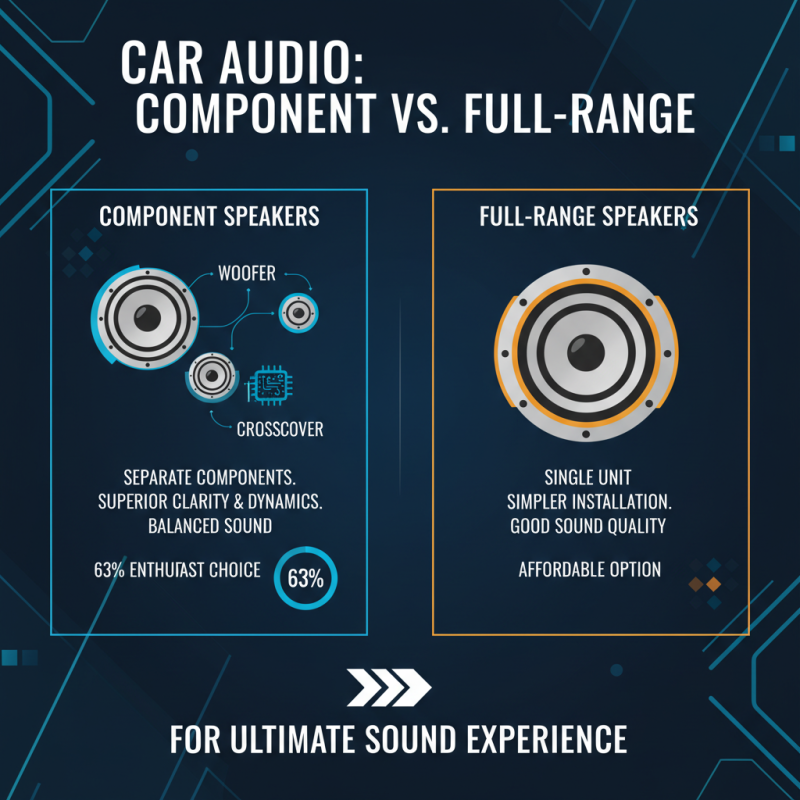
When selecting a car audio system, one of the primary decisions is choosing between component and full-range speaker systems. Component speakers consist of separate components including woofers, tweeters, and crossovers, allowing for greater sound clarity and a more refined listening experience. According to a study by the Consumer Technology Association, 63% of car audio enthusiasts prefer component systems for their ability to deliver balanced sound profiles and enhanced dynamics, particularly in sophisticated audio setups. The separation of frequencies means that each element can perform its best, leading to a fuller, more immersive sound.
On the other hand, full-range speaker systems integrate multiple elements into a single unit, designed for ease of installation and often at a lower price point. A report from the International Consumer Electronics Association highlights that full-range systems account for approximately 47% of the market due to their convenience and better suitability for casual listeners or those who prioritize simplicity over high-fidelity audio. While they may lack the precision and depth of component systems, they still provide satisfactory sound quality for most everyday users, especially in vehicles where sound barriers and acoustics are less than ideal.
Ultimately, the choice between component and full-range systems hinges on an individual's listening preferences, budget, and installation capabilities. Car audio enthusiasts seeking optimal sonic performance may gravitate towards component systems, while casual listeners looking for a cost-effective and straightforward solution may find full-range systems more appealing.
Evaluating Power and Amplification Needs for Optimal Sound
When selecting a car audio system, understanding the power and amplification needs of your vehicle is crucial for achieving optimal sound quality. The first step is to assess the existing electrical system in your car, which includes the battery and alternator capacity. A powerful audio system requires sufficient voltage and amperage to function correctly, especially if you're considering multiple speakers or subwoofers. The typical recommendation is to have a minimum of 14.4 volts for proper operation, but the actual requirements will depend on the components you choose.
Next, you’ll want to consider the wattage requirements of your audio system. The total power output (measured in watts) should match or exceed the combined needs of all your installed components. For instance, if your speakers require 50 watts each and you have four, your amplifier should ideally output at least 200 watts. Additionally, look for a head unit that has a preamp output, which allows for better signal strength and sound clarity when connected to a standalone amplifier. Properly matching these power specifications will not only enhance your audio experience but also prevent component damage and ensure longevity.
Power and Amplification Needs for Car Audio Systems
Installation Considerations for Your New Car Audio System
When installing a new car audio system, several key considerations come into play to ensure optimal performance and a seamless integration with your vehicle. First and foremost, assessing your vehicle's existing electrical system is crucial. Make sure the power supply can handle the new system's requirements, which may include amplifiers and high-output speakers. Additionally, consider any necessary upgrades to the wiring or alternator to accommodate increased power demands.
Another important aspect of installation is the physical fit of the audio components. Different vehicles have varying dimensions and layouts, which can affect speaker placement and the size of head units. Measure the available spaces for receivers and speakers and choose components that fit comfortably without impeding other functions within the vehicle. Furthermore, the mounting process should ensure that speakers are securely attached to prevent vibrations and rattling that can distort sound quality. Taking the time to meticulously plan the installation will not only enhance audio performance but also improve overall driving enjoyment.

 +86-18126757325
 CONTACT NUMBER
 CONTACT NUMBER